The World Cup
How a modest tournament of thirteen teams became the most-watched spectacle on Earth — and the story football tells about the world.
Need an easier version? Read this lesson at A2/B1 level →

The words for today's story
Each new word is hidden in a sentence. Read it aloud and say what you think the bold word means from the rest of the sentence — then reveal it and check.
Now use them — out loud
- Using spectacle, phenomenon and fervour, describe the atmosphere of a big sporting event you've seen (live or on screen).
- Which of today's words are about skill, which about emotion, and which about time and legacy? Sort them out loud and justify each choice.
The story, in three parts
Read each part. After it, there's a quick comprehension check (try the questions from memory first), then one thing to discuss.
Part 1 — Humble beginnings
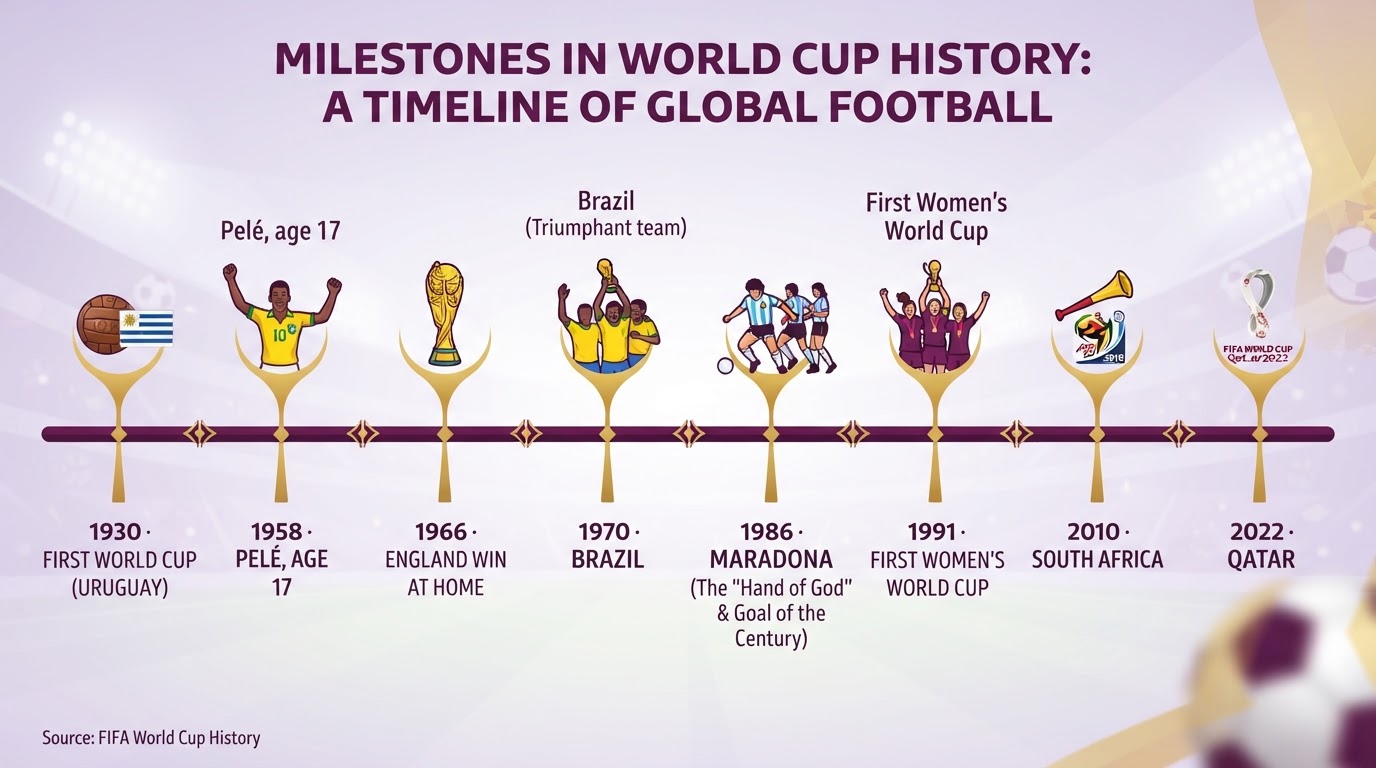
Football had been played in various forms for centuries, but the game we recognise today was codified in Britain during the nineteenth century, as clubs slowly agreed on a common set of rules. In 1904, seven European nations founded FIFA, the body that still governs the world game, and its founders dreamed of a single competition open to every country on Earth.
That dream became reality in 1930, when Uruguay hosted the inaugural World Cup. It was a modest affair: only thirteen teams made the journey, for the Atlantic crossing by steamship was long, costly and, for the Europeans, deeply unappealing. Uruguay — then a footballing powerhouse and the reigning Olympic champions — duly won on home soil, and the victors were presented with a small golden trophy. It was the seed of what would grow into the planet's greatest sporting spectacle.
1. How and when did modern football and FIFA come about?
2. Why was the 1930 World Cup "a modest affair", and who won it?
1. Modern football was codified in Britain in the nineteenth century; FIFA was founded by seven European nations in 1904 to govern the world game.
2. Only thirteen teams travelled, because the transatlantic steamship journey was long, costly and unappealing to Europeans. Hosts Uruguay won.
- The founders dreamed of "a single competition open to every country". Why is that idea so powerful — and has any other event ever achieved it as completely?
Part 2 — The making of legends
After the Second World War, the tournament grew with astonishing speed, driven by two forces: an ever-widening circle of competing nations, and the arrival of television, which carried the drama into living rooms across the globe.
Football began to mint heroes of genuinely worldwide fame. In 1958, a seventeen-year-old Brazilian named Pelé announced himself with a goal in the final, and a legend was born; his Brazil would go on to lift the trophy repeatedly, playing a brand of football so fluent it looked almost like art. In 1966, England clinched the title on home soil — their first and, so far, only triumph. And in 1986, Diego Maradona produced, within a single quarter-final, two of the most notorious goals in the sport's history: one a piece of barefaced cheating, the other a slalom of pure genius. Every four years, the fervour built until half the world seemed to hold its breath at once.
1. What two forces drove the tournament's rapid growth after the war?
2. What happened in 1958 and in 1986 to create footballing legends?
1. An ever-widening circle of competing nations, and the arrival of television.
2. In 1958 a seventeen-year-old Pelé scored in the final and became a legend; in 1986 Maradona scored two of the most famous goals ever — one cheating, one genius — within a single match.
- Maradona's two goals — one cheating, one genius — came minutes apart. Can we admire an athlete's brilliance and condemn their conduct at the same time?
Part 3 — The world's mirror
Today the World Cup is the most-watched event on Earth: the final draws a television audience running into the billions, dwarfing any other single broadcast. It has also become a genuinely global affair, no longer the private property of Europe and South America. In 2010, South Africa became the first African host; in 2022, Qatar staged it in the Middle East for the first time, amid fierce debate about cost, climate and human rights.
Meanwhile the Women's World Cup, launched only in 1991, has grown from an afterthought into a phenomenon in its own right, filling stadiums and breaking viewing records with each edition. From thirteen travel-weary teams in 1930 to a festival watched by half the planet, football has become a kind of mirror — one in which the whole world, for a few weeks every four years, chooses to look at itself.
1. How do we know the final is the most-watched event on Earth?
2. In what ways has the World Cup become "a genuinely global affair"?
1. Its television audience runs into the billions, dwarfing any other single broadcast.
2. It has left its old European/South American home — South Africa hosted in 2010 (first in Africa), Qatar in 2022 (first in the Middle East) — and the Women's World Cup, from 1991, has become a phenomenon of its own.
- Qatar 2022 sparked fierce debate about cost, climate and human rights. Should the right to host a global event depend on a country's record on issues like these? Who should decide?
Grammar — Intensifiers & Extreme Adjectives
Sport lives on strong language — a match isn't just good, it's absolutely breathtaking. To sound natural, you need to know which adjectives can be graded and which are already "extreme".
• Gradable adjectives (good, big, cold, tired, exciting) can be stronger or weaker. We grade them with very, quite, rather, fairly, extremely, a bit: "The first half was quite dull." "Pelé was very good."
• Extreme (non-gradable) adjectives already mean "very + something" (huge = very big; freezing = very cold; brilliant = very good). We do not say "very huge". We boost them with absolutely, utterly, completely, totally, simply: "The atmosphere was absolutely electric."
• really works with both; absolutely belongs with extreme adjectives.
1. very or absolutely?
Choose the intensifier that fits the adjective.
1. The atmosphere in the stadium was electric.
2. To be honest, the first half was boring.
3. By the final whistle the players were exhausted.
4. Even as a teenager, Pelé was good.
1. absolutely (electric is extreme) · 2. very (boring is gradable) · 3. absolutely (exhausted is extreme) · 4. very (good is gradable)
2. Make it stronger
Replace the very + adjective with a single extreme adjective.
1. a very big crowd → a crowd
2. a very good goal → a goal
3. very tired players → players
4. a very surprising result → an result
1. huge / enormous · 2. brilliant / superb / stunning · 3. exhausted · 4. astonishing / shocking
3. Complete the paragraph
Add a suitable intensifier before each adjective. Read it aloud when you finish.
The 1970 final was brilliant — many call it the finest ever. Brazil were dominant, and their fourth goal was stunning. The Italian defenders looked exhausted by the end, and the watching world was captivated.
absolutely/simply brilliant · totally/completely dominant · absolutely/utterly stunning · completely/utterly exhausted · absolutely captivated
All five are extreme adjectives, so they take absolutely / completely / utterly — never "very".
Keep these ready — the Speak tab is where vivid, well-chosen intensifiers make a description come alive.
The big picture
Read each graphic closely and answer out loud. Reach for the language of comparison and emphasis as you go.
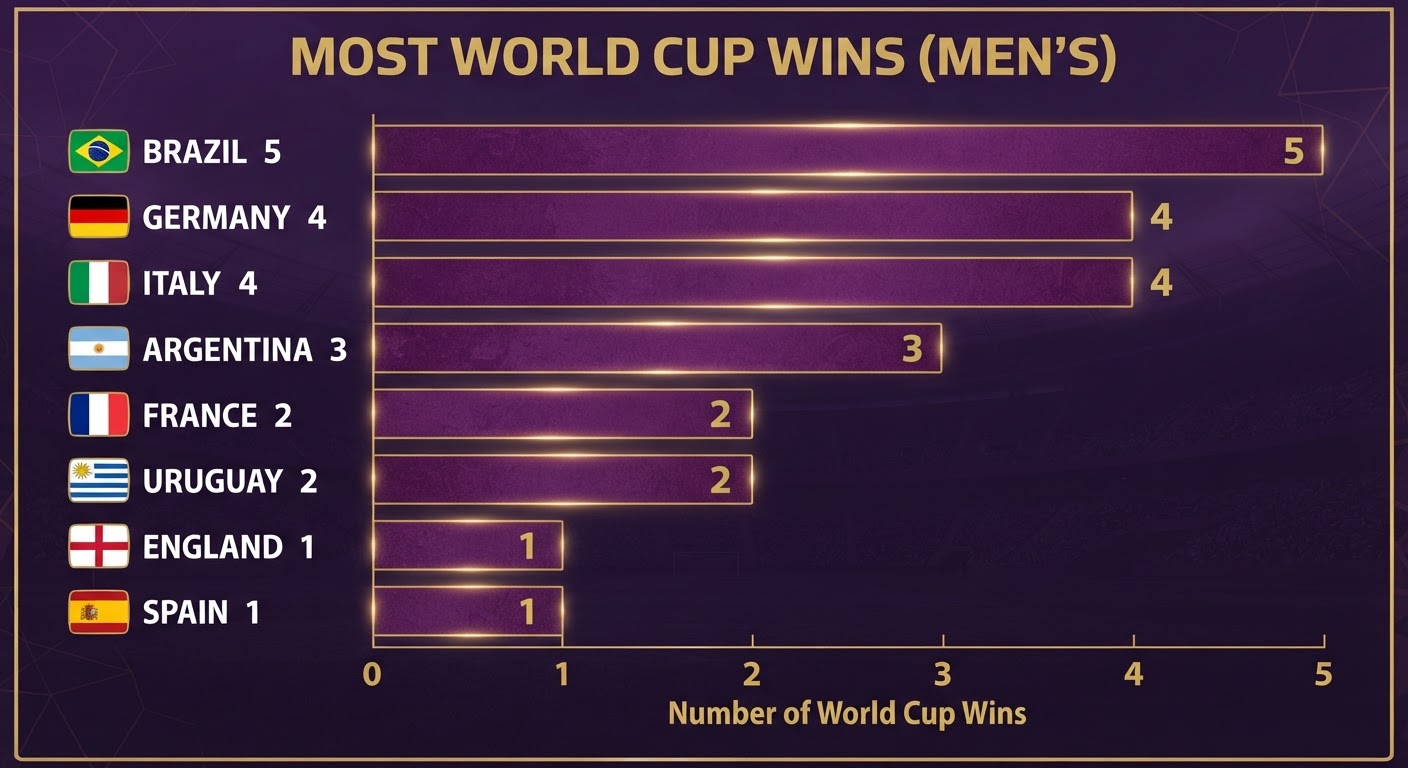
- What does the chart tell us about where footballing power has been concentrated? Which continents dominate — and which are missing?
- Brazil are streets ahead with five titles. Does a record like that make a country the "greatest", or just the most consistent?
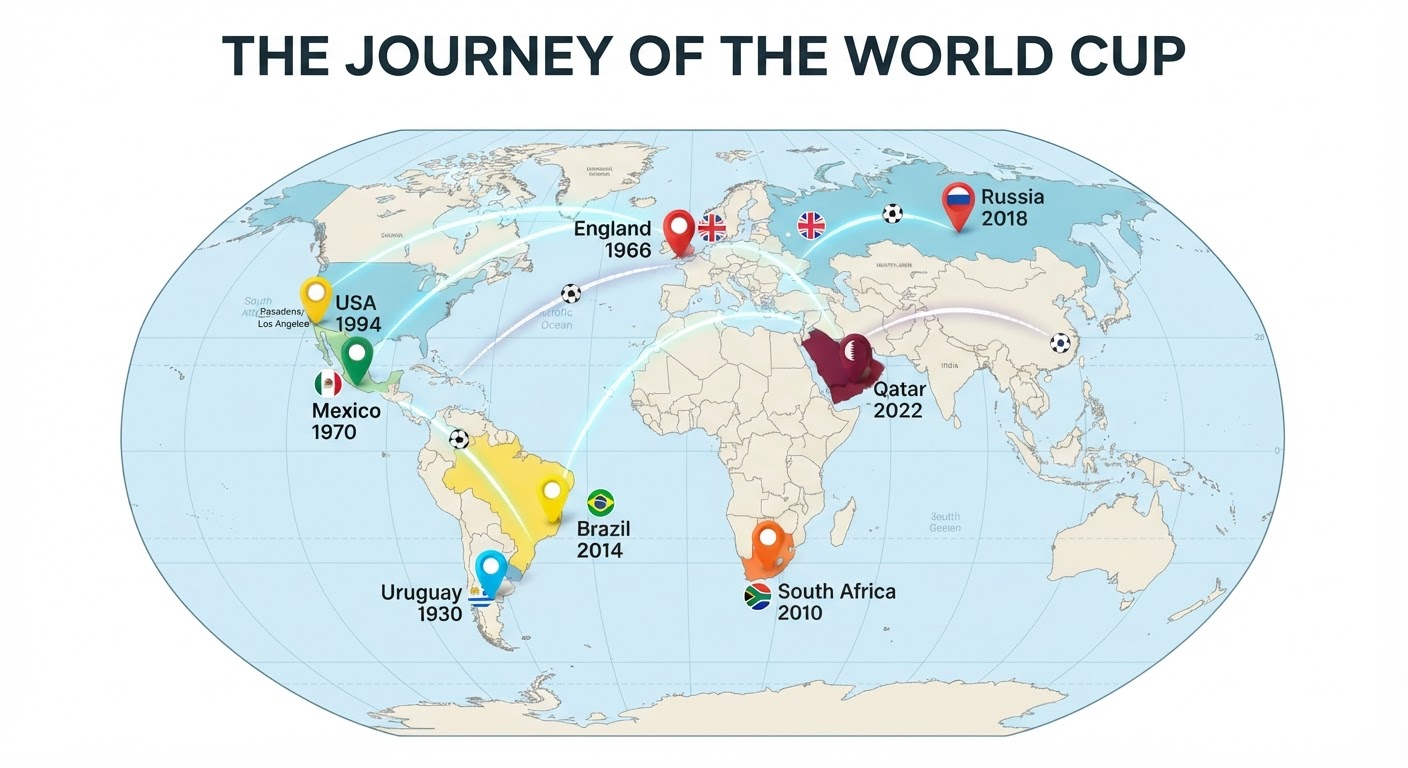
- Trace how the tournament has spread across the map over ninety years. What might drive FIFA's choice of host — sport, money, politics, or something else?
- What does a country stand to gain, and to lose, by hosting?
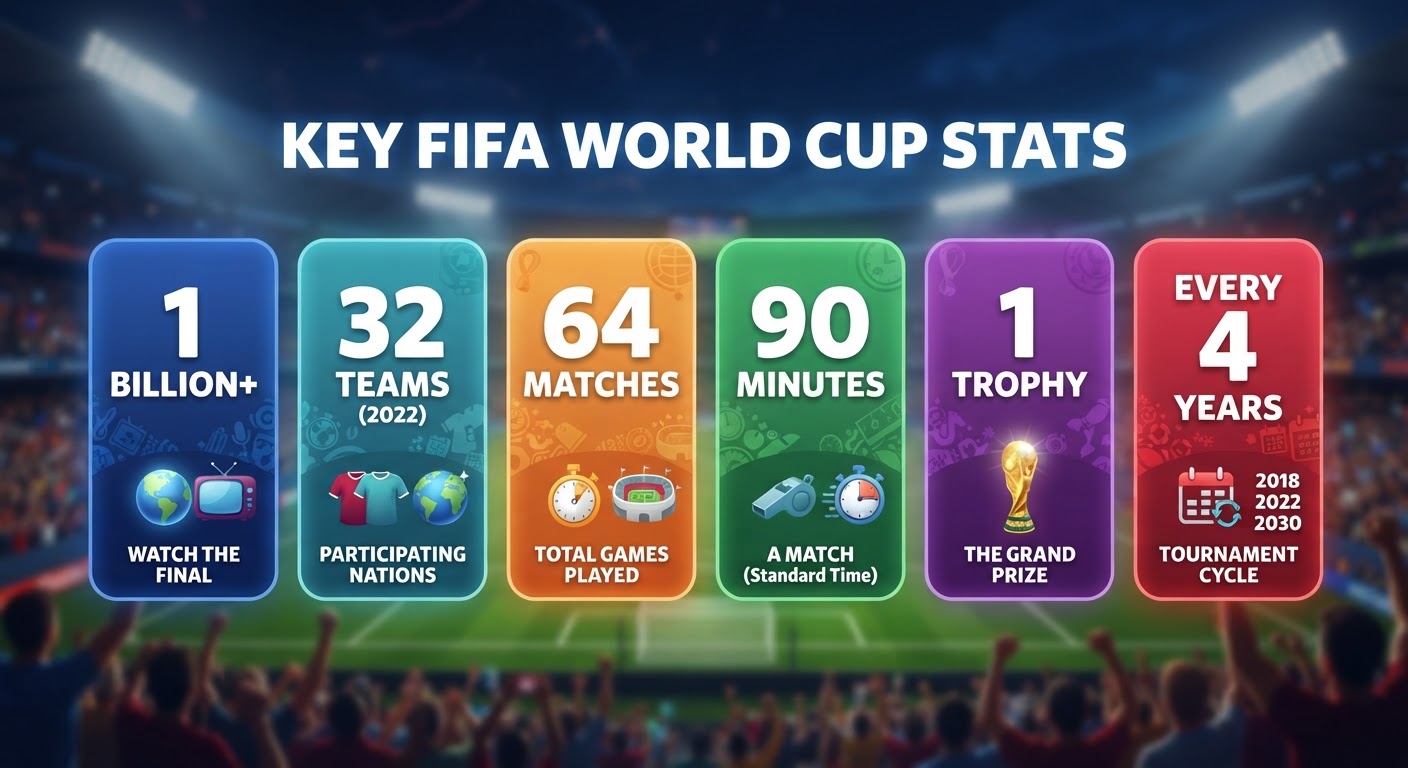
- Which single number is the most astonishing, and why? Use an extreme adjective in your answer.
- More than a billion people watch one match. What is it about football, rather than any other sport, that commands an audience on that scale?
Speak
This is the heart of the lesson — do all of it out loud. The timer is there to keep you going: fill the time with detail rather than escaping it.
Narrate the history of the World Cup in your own words, as if to someone who has never followed it: the modest first tournament of 1930 → the age of television and legends → the global spectacle of today.
Use at least three intensifiers / extreme adjectives and five key words from today.
Make the case for the greatest player who ever lived — Pelé, Maradona, Messi, Ronaldo, or another. Argue with vivid, well-chosen adjectives ("absolutely unstoppable", "simply mesmerising"), then defend your choice when your teacher argues for someone else. What actually makes a player "the greatest" — trophies, talent, or influence?
Take one of these positions and build a case for it:
- Hosting a World Cup is worth the enormous cost — the legacy justifies it.
- Global sport should stay out of politics; a tournament is just a tournament.
- A country's human-rights record should affect whether it can host.
Then argue the opposite side for one minute. Whichever you truly believe, make the strongest case you can for the view you reject.
To finish — the bigger questions
- Football is called "the world's game". Why has it spread further than any other sport — and does anything threaten that dominance?
- A World Cup can lift a nation's mood and its economy, yet leave behind empty stadiums and debt. On balance, is hosting a gift or a burden?
- The Women's World Cup has grown explosively since 1991. Will it one day rival the men's — and what would need to change for that to happen?
- Before you go — from memory: give one sentence with a gradable adjective + very, and one with an extreme adjective + absolutely, both about the World Cup.