This is the whole test, start to finish, in the same order and on the same clocks as the real one. Work through the tabs from left to right. Sit as you would in the exam, speak aloud, and do not pause the timers.
Section
What you do
The clock
1 · Interview
Six questions about you and your work, in two parts of three.
60 seconds per question
2 · Radio dialogues
Ten recordings. Two questions each, three options.
15 seconds per question · one replay per recording
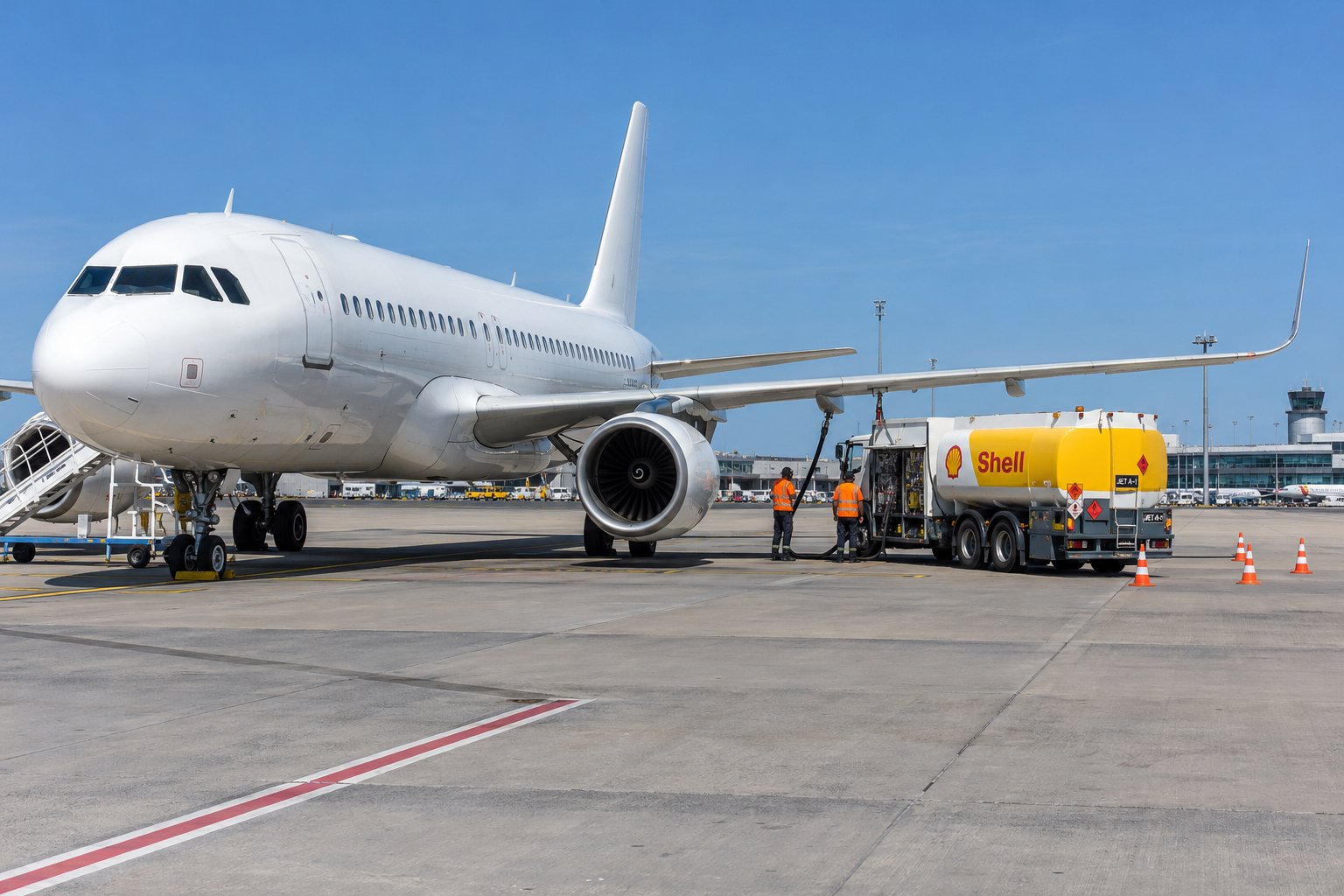
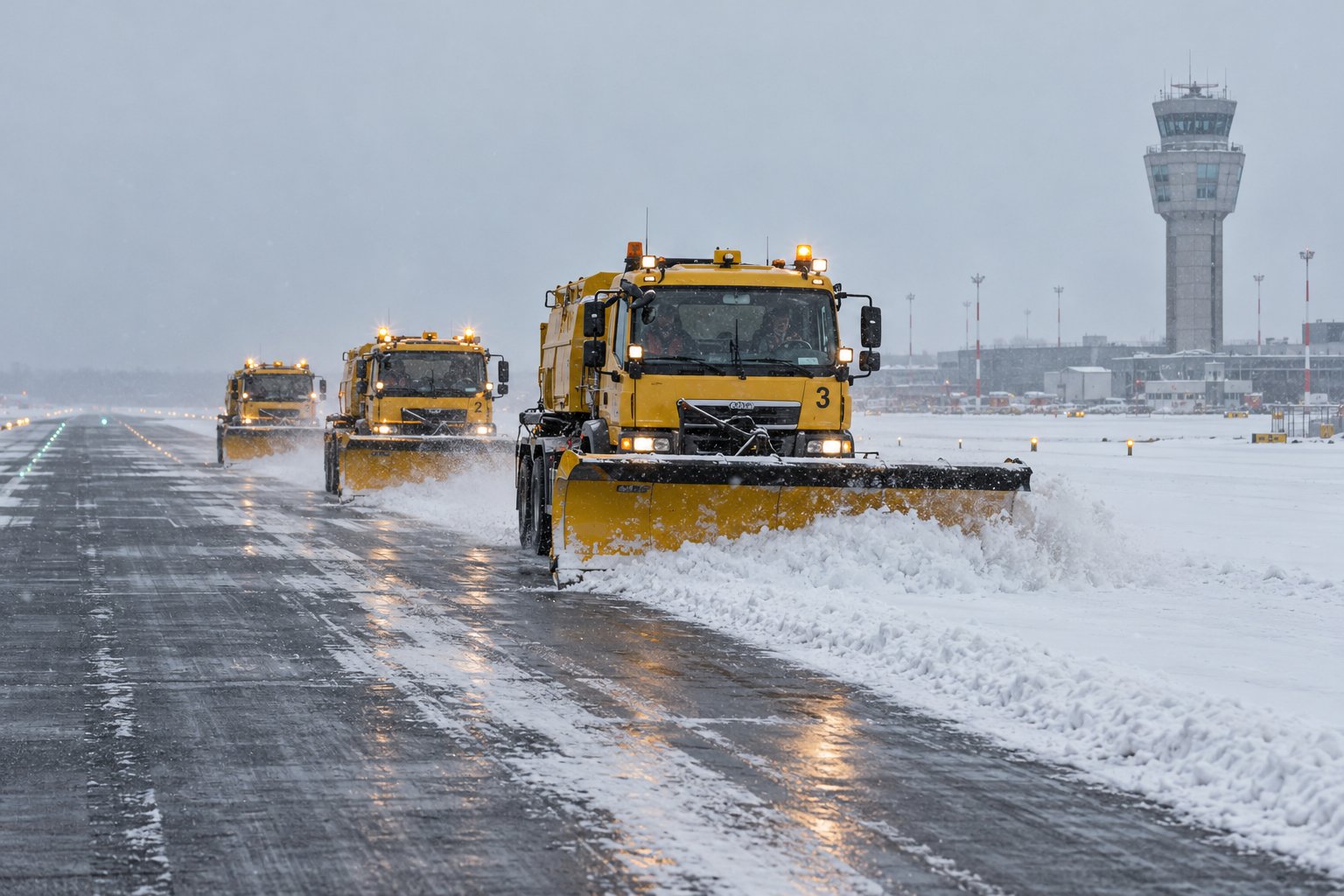
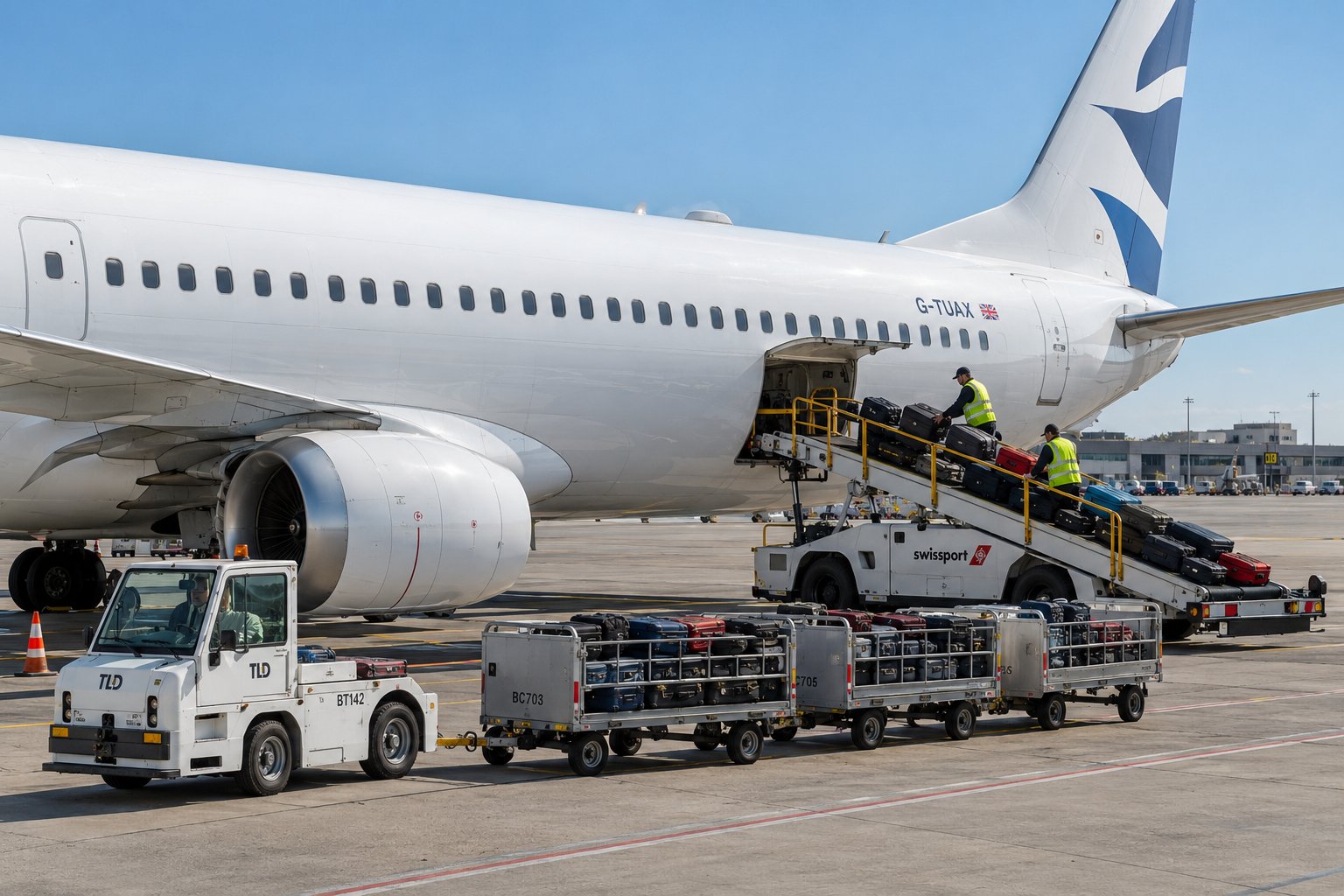
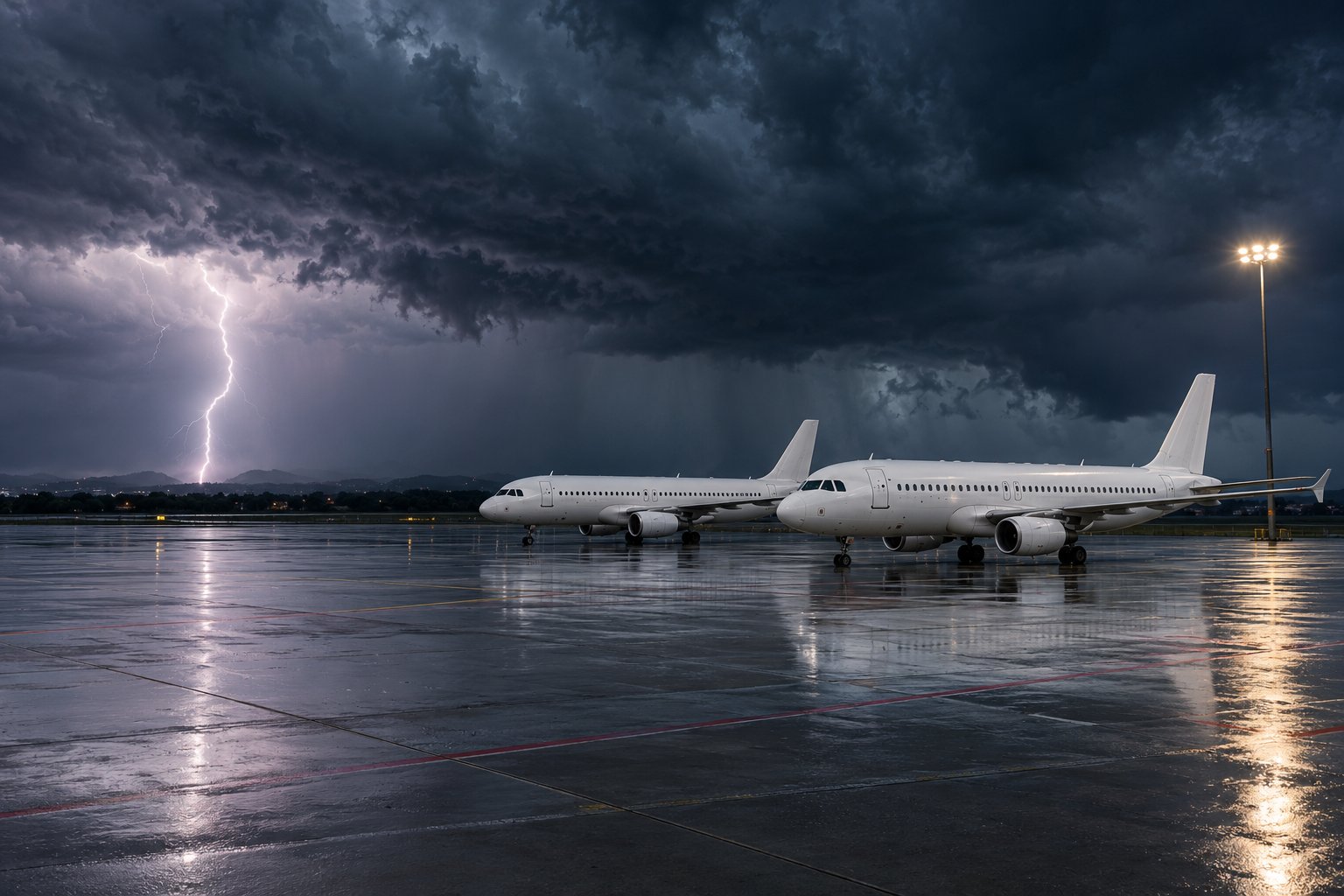
3 · Photos
Five photographs. Choose the two true statements from six.
45 seconds per photo
4 · Summaries
Part 1: a written report, then five key words. Part 2: a radio exchange.
90 s read · 90 s speak · 45 s speak
How it is marked: Sections 2 and 3 are scored by the page. Sections 1 and 4 you rate yourself at the end. In every section, up to 4 errors is a pass, 2 or fewer is Level 5, and 0 is Level 6. Your final level is your weakest section.
Before you start:
Use headphones and a quiet room. Sound is needed for Sections 2 and 4.
Have paper and a pen for notes.
Press Listen only when you are ready. You can listen twice: once, plus one replay.
If you do not understand a question in Section 1, say: Could you repeat the question, please? Use it once at most.
When you are ready, open 1 · Interview.
Section 1 — Interview
Six questions, in the same shape as the real test: three general questions about you and your work, then three questions about aviation work itself. You have up to 60 seconds for each answer, so use the time, but you do not have to fill every second. Start the timer, answer aloud, and move on when it stops.
Part A — about you and your work
Question 1. How would you describe your work?
01:00
Question 2. When did you decide to choose this career, and what do you like about it?
01:00
Question 3. What advice would you give to a young person who wanted to do this work?
01:00
Part B — aviation work topics
Question 4. How do controllers and pilots avoid misunderstandings on the radio?
01:00
Question 5. What would you do if radio communication with an aircraft suddenly failed?
01:00
Question 6. How can technology help prevent collisions, and what are its limits?
01:00
Rate your Section 1
Overall, I would give this section:
Section 2 — Ten radio dialogues
Press Listen for each recording. As in the real test, the two questions appear when the audio begins. Question 1 checks that you understood the situation or the numbers; question 2 asks what a word or phrase means in that context. For each question, press Start 15 s and choose your answer. You can change it until the time ends, when it locks. An empty answer scores nothing.
Recording 1
GND: Corvus 3 8 4, taxi to holding point runway 0 9 via taxiway Alpha and Bravo, QNH 1 0 1 7. P: Taxi to holding point runway 0 9 via Alpha and Bravo, QNH 1 0 1 7, Corvus 3 8 4. GND: Corvus 3 8 4, hold short of taxiway Bravo, a vehicle is crossing. P: Holding short of Bravo, Corvus 3 8 4. GND: Corvus 3 8 4, vehicle clear, continue taxi. P: Continuing taxi, Corvus 3 8 4.
1.1 Which route does the pilot take to the holding point?
00:15
1.2 What does hold short of mean in this context?
00:15
Recording 2
P: Tower, Brisa 5 6 1, final runway 2 7. TWR: Brisa 5 6 1, wind 2 8 0 degrees, 2 2 knots, gusting 3 4 knots, runway 2 7, cleared to land. P: Cleared to land runway 2 7, Brisa 5 6 1. TWR: Brisa 5 6 1, go around, I say again, go around, a vehicle is on the runway. P: Going around, Brisa 5 6 1.
P: Pan pan, pan pan, pan pan. Tower, Alder 8 1 4, we have hit birds on departure, the left engine is vibrating, request return to the airport. TWR: Alder 8 1 4, Tower, roger, how many persons on board? P: 1 1 2 persons on board, fuel for 2 hours, we will keep the engine at idle. TWR: Alder 8 1 4, runway 2 7, wind calm, cleared to land, emergency services are standing by. P: Cleared to land runway 2 7, Alder 8 1 4.
5.1 What caused the problem?
00:15
5.2 What does at idle mean in this context?
00:15
Recording 6
TWR: Kestrel 6 0 2, wind 3 6 0 degrees, 1 5 knots, visibility 8 0 0 metres in fog, runway visual range 6 0 0 metres. P: Tower, Kestrel 6 0 2, that is below our minimum, we will divert to our alternate. TWR: Kestrel 6 0 2, roger, report your intentions when ready. P: Request climb to 4,000 feet and heading for Lakemouth, Kestrel 6 0 2. TWR: Climb 4,000 feet, turn right heading 0 9 0, Kestrel 6 0 2.
6.1 What does the pilot decide to do?
00:15
6.2 What does alternate mean in this context?
00:15
Recording 7
TWR: All stations, runway 0 9 wet, braking action medium to poor, patches of ice near the threshold. P1: Tower, Delta 4 4 6, request different runway. TWR: Delta 4 4 6, runway 1 8 available, wind 1 8 0 degrees, 1 0 knots, braking action good. P1: Runway 1 8, Delta 4 4 6, we will be ready in 5 minutes. TWR: Delta 4 4 6, roger, expect runway 1 8.
7.1 Which runway will Delta 446 use?
00:15
7.2 What does braking action mean in this context?
00:15
Recording 8
P: Tower, Sable 3 0 5, request priority landing, we have a medical emergency, a passenger is unconscious. TWR: Sable 3 0 5, understood, are you declaring an emergency? P: Negative, not an emergency at this time, but we need priority. We are 2 5 minutes from the field. TWR: Sable 3 0 5, priority approved, an ambulance will meet the aircraft at the stand. P: Thank you, Sable 3 0 5.
8.1 Why does the pilot need priority?
00:15
8.2 What does declaring an emergency mean in this context?
00:15
Recording 9
P: Ground, Orion 1 5 3, ready to taxi. GND: Orion 1 5 3, hold position, a runway inspection is in progress. P: Orion 1 5 3, how long is the delay? GND: Orion 1 5 3, expect a delay of 1 5 minutes, I will call you. P: Holding position, Orion 1 5 3, we will wait.
9.1 How long is the delay?
00:15
9.2 What does hold position mean in this context?
00:15
Recording 10
TWR: Sable 9 4 6, line up and wait runway 3 6. P1: Line up and wait runway 3 6, Sable 9 4 6. P2: Tower, Falcon 2 2 8, 3 miles final runway 3 6. TWR: Falcon 2 2 8, continue approach, expect late landing clearance. TWR: Falcon 2 2 8, go around, I say again, go around, an aircraft is still on the runway. P2: Going around, Falcon 2 2 8. TWR: Sable 9 4 6, we apologise, the take-off clearance will be delayed.
10.1 Which aircraft must go around, and why?
00:15
10.2 What does line up and wait mean in this context?
00:15
Section 3 — Five photographs
Each photograph has six statements and exactly two are true. You have 45 seconds per photo. Choose two, then lock, or let the timer lock for you.
Photo 1 of 5
00:45
The aircraft is refuelling the truck — WHO DOES WHAT: the truck does the refuelling; the aircraft receives the fuel. Towed by the aircraft — the truck is parked, and the aircraft is not pulling anything. Inside the truck — WHERE: both crew members are standing outside it, next to the hose. About to be pushed back — WHAT STAGE: steps are attached and the hose is connected, so the aircraft is not leaving yet.
Photo 2 of 5
00:45
Covered with snow by the ploughs — the verb is reversed: ploughs remove snow, they do not add it. Followed by an aircraft — NOT IN THE PICTURE: there is no aircraft. One plough — HOW MANY: there are three. Opposite directions — all three are driving the same way, in a line.
Photo 3 of 5
00:45
The tug is being pulled by the carts — WHO DOES WHAT: the tug pulls the carts. Thrown onto the ground — the cases are on a conveyor and the carts. Empty carts — WHAT STATE: the carts are full of suitcases. Handlers on the tug — WHERE: the two handlers are at the top of the conveyor, beside the cargo door.
Photo 4 of 5
00:45
The vehicle is being led by the aircraft — WHO DOES WHAT: the vehicle leads and the aircraft follows. Pushed by the vehicle — the aircraft is moving under its own power, with its landing lights on; the vehicle is only guiding. Parked behind — WHERE: the vehicle is in front, and it is moving. Taking off — WHAT STAGE: it is taxiing along a taxiway with edge lights, not on a runway accelerating.
Photo 5 of 5
00:45
The aircraft are being struck — WHO DOES WHAT: the bolt hits the ground in the distance, not the aircraft. Being loaded and passengers boarding — NOT IN THE PICTURE: no people or vehicles at all. On the right — WHERE: the lightning is on the left; the lamp mast is on the right.
Section 4 — Two summaries
Part 1 — Report and key words
You will see a report for 90 seconds. Make notes on paper. Then it disappears and five key words appear. Summarise the report aloud for 90 seconds, using all five key words exactly as written.
01:30
At 14:20 a fuel truck driver noticed fuel dripping from a valve while refuelling a regional aircraft. He stopped the pump at once and informed the apron supervisor. The fire service arrived within three minutes and covered the spill with foam. However, the departure was delayed by forty minutes because the aircraft had to be inspected. Passengers were told the reason and nobody was injured. The valve was replaced the same evening.
noticedsupervisorfoamhoweverinspected
01:30
At 14:20 a driver noticed fuel dripping from a valve while he was refuelling a regional aircraft. He stopped the pump and told the apron supervisor. The fire service arrived within three minutes and covered the spill with foam. However, the departure was delayed by forty minutes because the aircraft had to be inspected. Passengers were told the reason and nobody was hurt. The valve was replaced that evening.
Part 2 — Radio summary
Listen to a radio exchange of about two minutes. It begins as a routine situation and then something unexpected happens. Take notes. You can listen twice. Then summarise what happened in 45 seconds.
TWR: Alder 4 1 0, line up and wait runway 0 9. P: Line up and wait runway 0 9, Alder 4 1 0. TWR: Alder 4 1 0, wind 0 9 0 degrees, 8 knots, runway 0 9, cleared for take-off. P: Cleared for take-off runway 0 9, Alder 4 1 0. TWR: Alder 4 1 0, airborne 1 4 3 2, contact Departure 1 2 0 decimal 6. P: Departure 1 2 0 decimal 6, Alder 4 1 0. P: Tower, Alder 4 1 0, before we leave your frequency, the crew can smell smoke in the cabin. Request immediate return. TWR: Alder 4 1 0, roger, turn right heading 2 7 0, descend 3,000 feet, runway 0 9 available. Do you wish to declare an emergency? P: Affirm, Mayday, Mayday, Mayday, Alder 4 1 0, smoke in the cabin, 8 7 persons on board, returning. TWR: Alder 4 1 0, Mayday received, the fire service is standing by, cleared to land runway 0 9, wind 0 9 0 degrees, 8 knots. P: Cleared to land runway 0 9, Alder 4 1 0. TWR: All stations, runway 0 9 is closed for an emergency landing, expect 2 0 minutes delay. Alder 4 1 0, cleared to land. P: Tower, Alder 4 1 0, on the ground, the fire service has found no fire. The smoke came from an overheated cabin fan. TWR: Alder 4 1 0, roger, vacate right and stop on taxiway Bravo, passengers will leave the aircraft there. P: Vacate right, stop on Bravo, Alder 4 1 0.
00:45
Alder 410 took off normally from runway 09. Just after take-off the crew reported smoke in the cabin and asked to return. The controller asked if they wanted to declare an emergency and the pilot declared Mayday, with 87 people on board. The fire service stood by, the runway was closed for the emergency landing, and the aircraft landed safely. Unexpectedly, the fire service found no fire: the smoke came from an overheated cabin fan.
Rate your Section 4
Overall, I would give this section:
Results
Sections 2 and 3 come from the page. Sections 1 and 4 come from your own rating, because they need a listener.
Section
Errors
Result
How the real test reports it: Sections 2 and 3 give the ICAO level. Sections 1 and 4 are rated from the recording by two raters (a language expert and an operational expert), and the final score is the average, on a scale of 1–30: 1–17 pre-operational, 18–25 Level 4, 26–29 Level 5, 30 Level 6.
What to look at next
Section 2 errors: open the script of each recording you missed and find the exact word that gave the answer: a number, a correction, a reason.
Section 3 errors: for each missed photo, open Why the others are wrong and find the single detail that made each false statement fail.
Sections 1 and 4: record yourself once more on the question or summary where you stopped early.