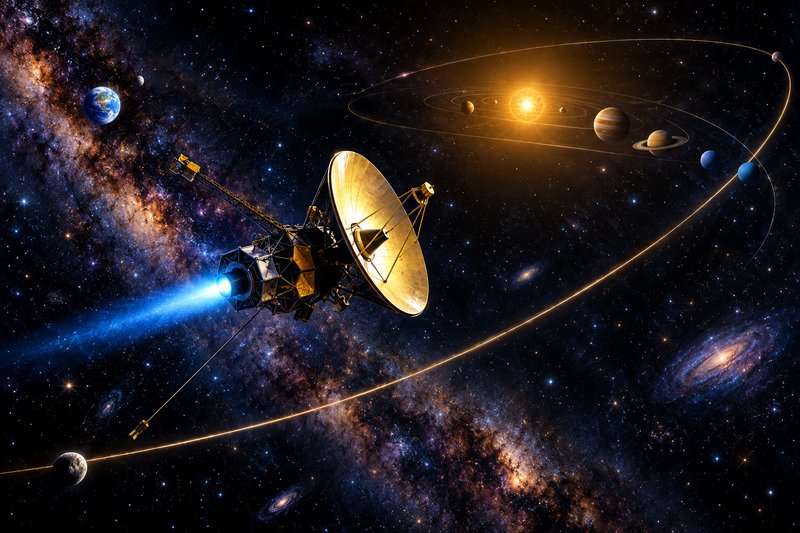
Six deep dives · real numbers · interactive labs

Deep Space

You know the planets. This is everything beyond them: how stars die, what a black hole really is, why the universe is stretching, and what the other 95% is.

Each lesson starts with a number that should not be true, then explains it properly, with the actual equations and the people who found them. Every lesson has labs you can play with: build a star, squeeze the Earth into a black hole, fit a galaxy's dark matter, fire Newton's cannon.

Where scientists still disagree, the lessons say so. There are open problems in every one, and some of them could be solved by whoever reads this. Start with the map or pick any card. They can be taken in any order.

The map — click a branch to open its lesson
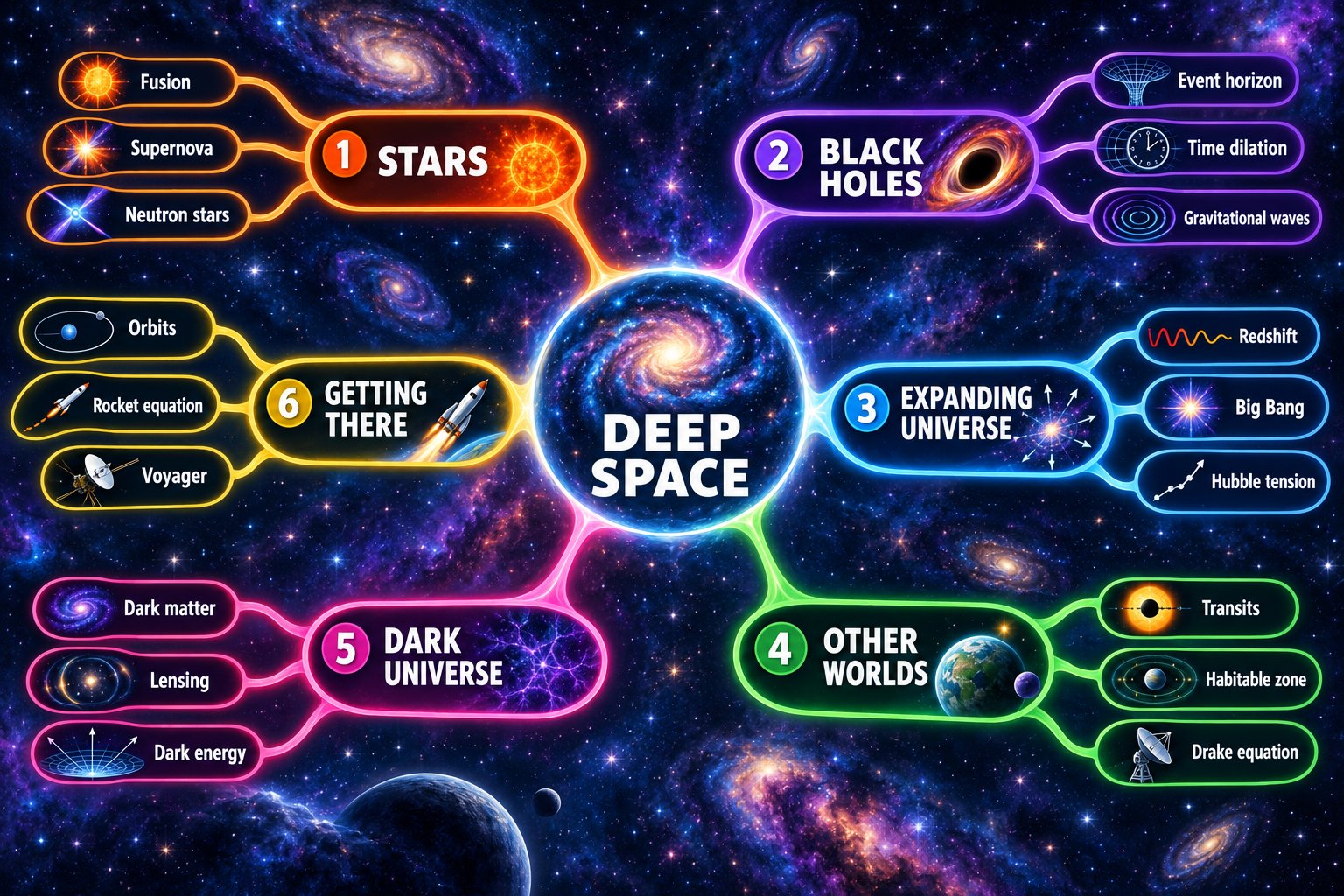
Six branches, six lessons. Each lesson has a hook, the idea, a lab, a challenge and a section of open questions.

The six lessons
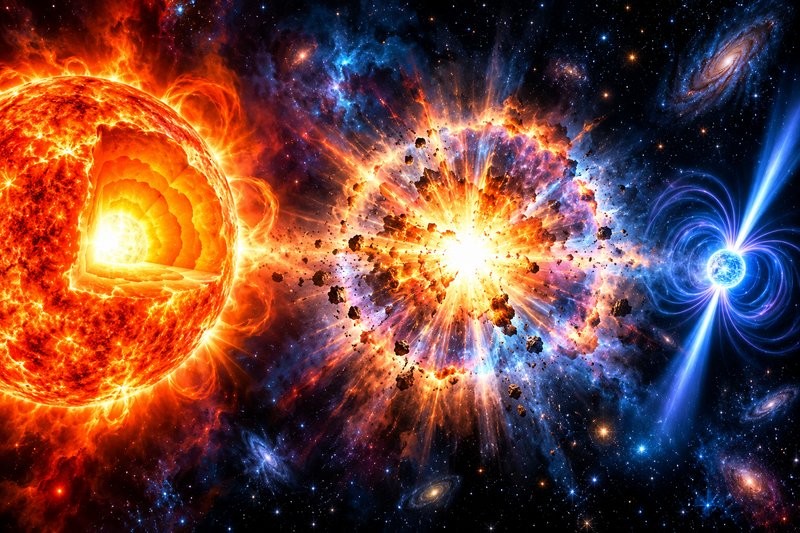
The layered inside of a massive star
1

How Stars Live and Die

The Sun turns 4 million tonnes of itself into light every second. Why does it not collapse, why does it have to die, and why do the biggest stars die first?
Labs: Build a star · The star onion · Where the elements come from
Open lesson →
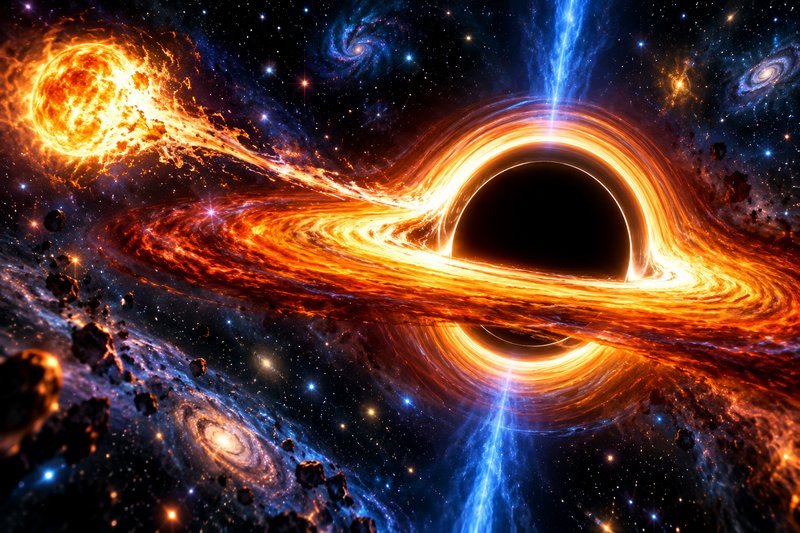
A black hole with a glowing accretion disc bending light
2

Black Holes

Squeeze the Earth to nine millimetres and it becomes one. What happens to time near the edge, and how did we finally photograph a shadow?
Labs: Squeeze it · Two clocks
Open lesson →
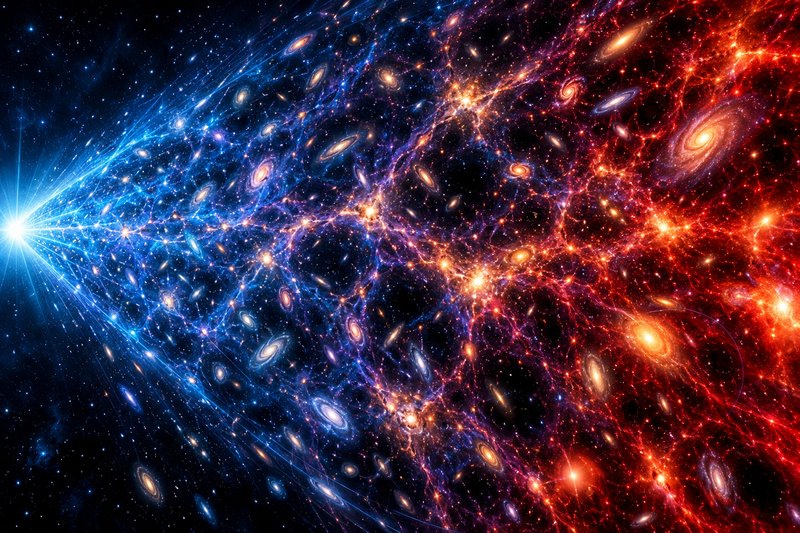
The cosmic web of galaxies stretching away from the Big Bang
3

The Expanding Universe

The universe is 13.8 billion years old, yet its edge is 46.5 billion light-years away. Space itself is stretching. Here is the evidence, and the argument that is still unsettled.
Labs: Redshift stretcher · Expanding-space sandbox · Light is old news
Open lesson →
A line of small planets crossing in front of a red dwarf star
4

Other Worlds

From zero known planets in 1991 to more than 6,000 now. How do you find a world you cannot see, and what do the numbers say about life?
Labs: Transit simulator · The Drake equation
Open lesson →
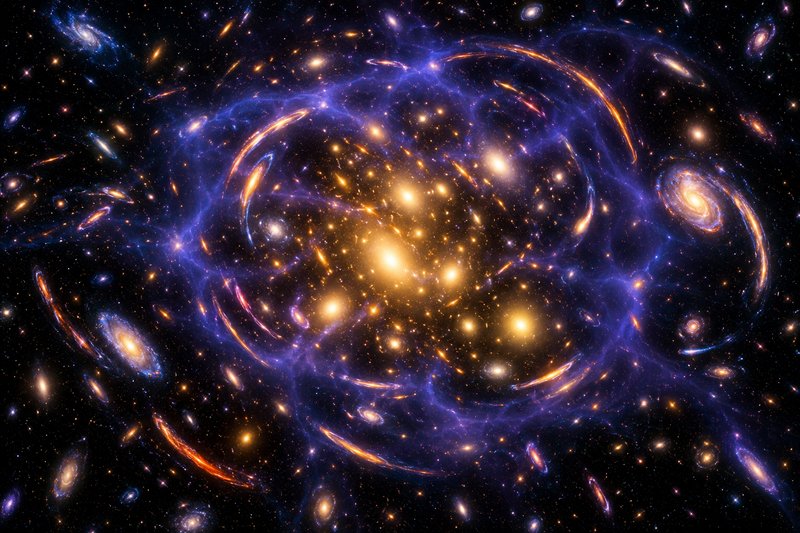
A galaxy cluster bending the light of galaxies behind it into arcs
5

The Dark Universe

Everything we have ever seen is 5% of the universe. How do we know the rest is there, when no one has ever detected it?
Labs: Fit a galaxy · Bend the light · How does it end?
Open lesson →
A space probe with a large dish far from the Sun
6

Getting There

Orbit is falling sideways. One equation explains why rockets are mostly fuel, why gravity assists matter, and why the next star is so far away.
Labs: Newton's cannon · The rocket equation · How long to Proxima?
Open lesson →

How each lesson works

1 · The Hook

A number that should not be true, and two questions to predict first.

2 · The Idea

The real explanation, with the people who found it and the equations behind it.

3 · The Lab

Interactive models you can change and break.

4 · Challenge

Five questions. Wrong answers explain themselves.

5 · Go Deeper

Explain it out loud, then follow the open questions.