Persepolis
Book Club
Four meetings around one remarkable book: a girl, a revolution and a life drawn in black ink. Read it alone, in pairs or round a table.
Marjane Satrapi's Persepolis is a true story told as a comic: a girl in Tehran, a revolution, a war, and years of living between two worlds. It is short, funny, sad and easy to start talking about, which makes it ideal for a book club.
Each of the four meetings takes one part of the book and gives you a story to read, a simple tool for talking about it, the language you need, and plenty of speaking. You can use them one-to-one, in pairs or with a group: take turns, respond to each other and bring your own opinions. You do not need to have finished the book, though reading along will make every meeting richer.
The map — click a meeting
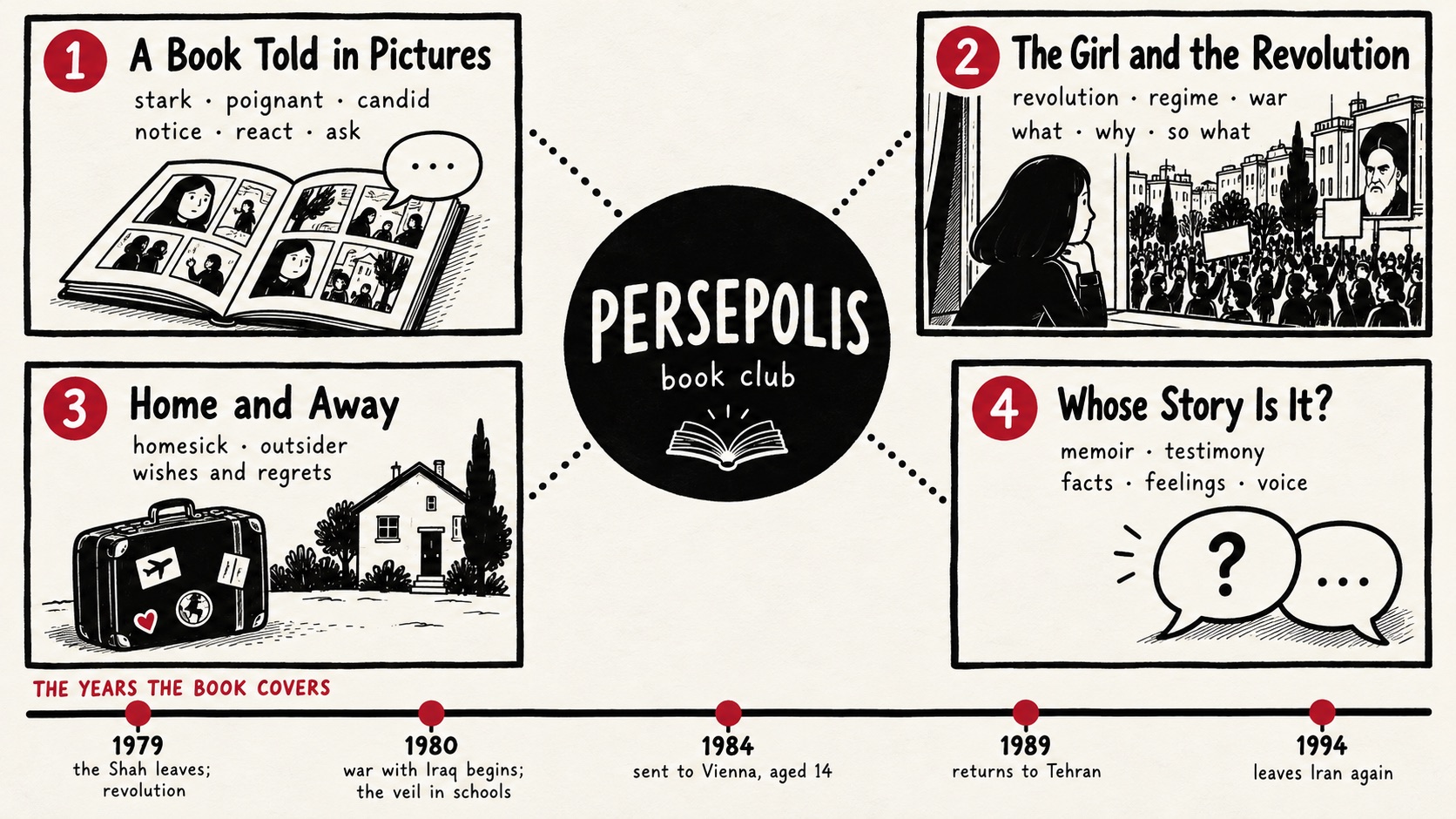
Four meetings, one book, and the years it covers. Prefer an exam-style, analytical approach? See Persepolis: Close Reading.
Who it is for
Adults who read for pleasure and want to talk about what they read: members of book clubs, one-to-one readers and anyone who wants a real conversation in English about a real book. The language level is B2 to C1. You need no knowledge of Iran, comics or literary terms — each meeting explains what you need.
The series
The four meetings
How each meeting works
Ten words, worked out before you read.
The part of the book and its background, in three parts, with a talking point after each.
A simple way to talk about the book, a chance to try it, and where it breaks.
The grammar and phrases you need to write and talk about it.
Timed speaking tasks, then harder questions.